Tinka / Fintech
From Repayment Tool to Everyday Finance
Redesigning the app, launching Pay In-Store, and building the product foundations for Tinka's next phase of growth.
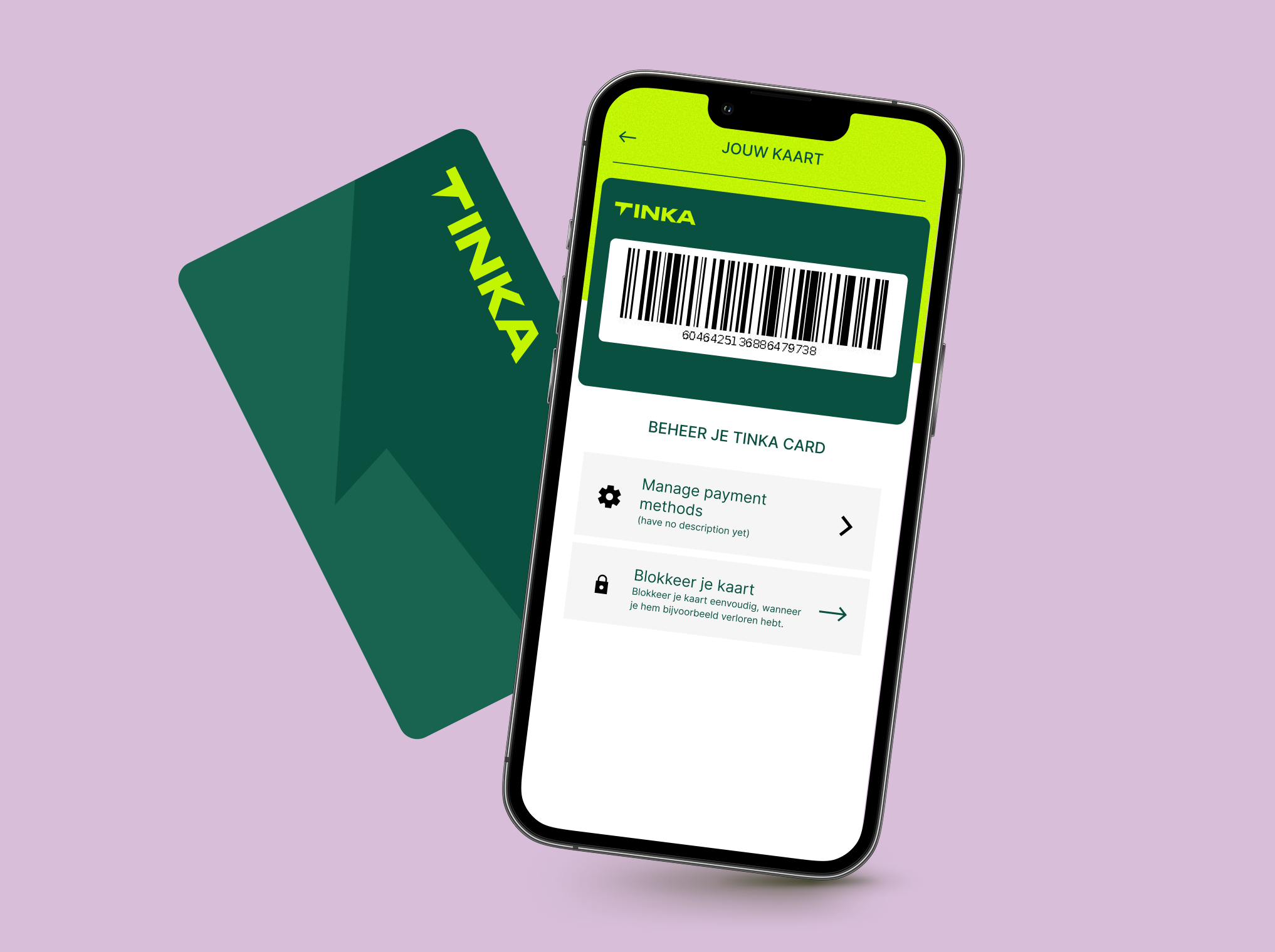
Redesigning Tinka for in-store payments and everyday use
Tinka's app originally behaved like a repayment utility: functional, but purpose-built for a single moment, paying off an online purchase after the fact. The opportunity was to redesign it into something customers would return to, and to launch Pay In-Store as an entirely new use case that extended Tinka into physical retail.
This is one case study with two connected chapters. The first was a brand refresh and app redesign that made Tinka feel more modern, trustworthy, and worth opening. The second was the launch of Pay In-Store and the Tinka Card, a 0→1 product experience that gave customers a reason to use Tinka in the moments they were already spending.
The challenge
The brief had three connected problems: deliver a rebrand and redesign that felt modern and coherent without disrupting an existing customer base; design a new in-store payment journey that worked in real checkout moments, where tolerance for confusion is near zero; and align product, onboarding, marketing, support, and compliance across both chapters of a financial product.
it was a new habit, not a new screen; teach the behaviour, or it never sticks
What I was responsible for
Product foundation
Led the redesign of the Tinka mobile app following the brand refresh, translating the new identity into a scalable, more returnable product UI.
Tinka Card experience
Designed the end-to-end experience for activating and using the Tinka Card in-store: discovery through payment and ongoing management.
Omni-channel experience
Worked across product, marketing, and customer care to design the supporting ecosystem: FAQs, onboarding content, in-store materials.
Team & systems leadership
Helped scale the design function: clearer product direction and specialist design systems support for future work.
Launching Pay In-Store as a real customer journey
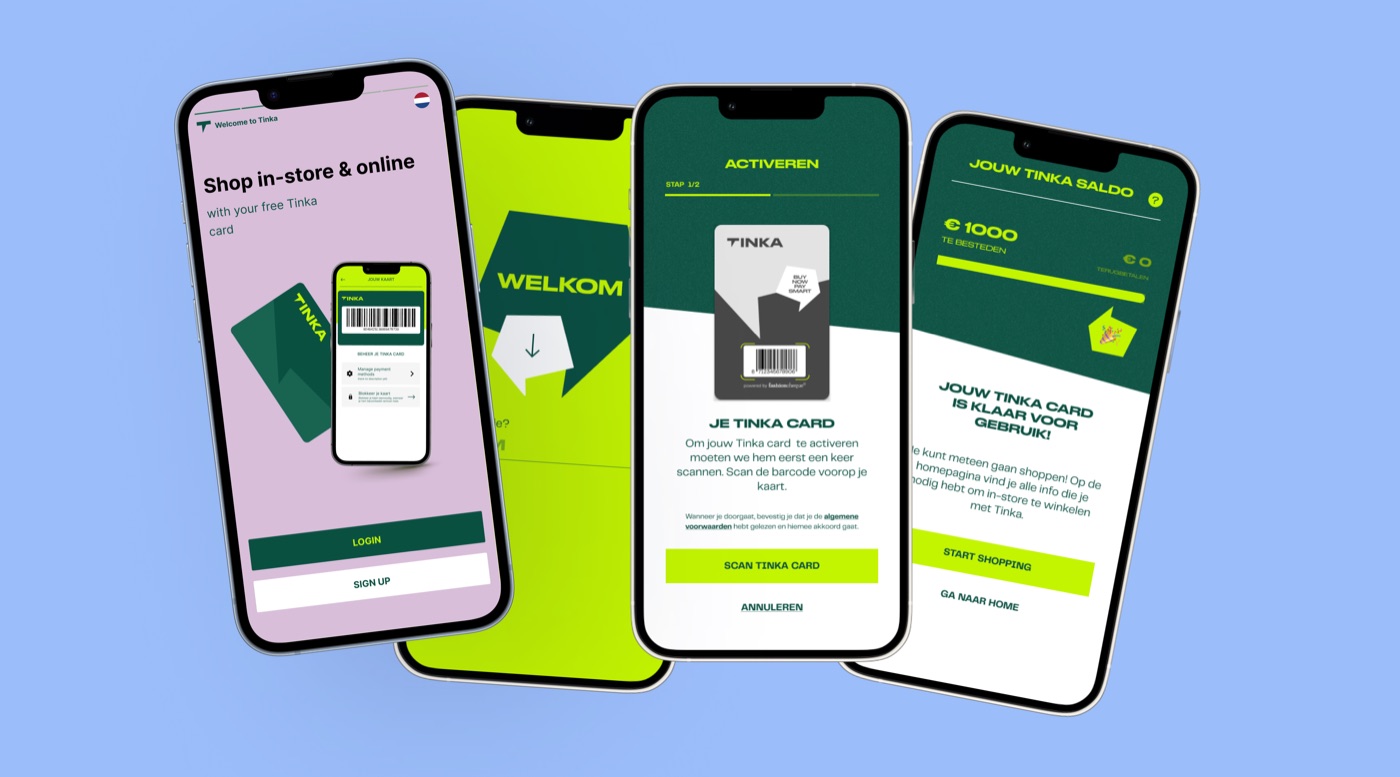
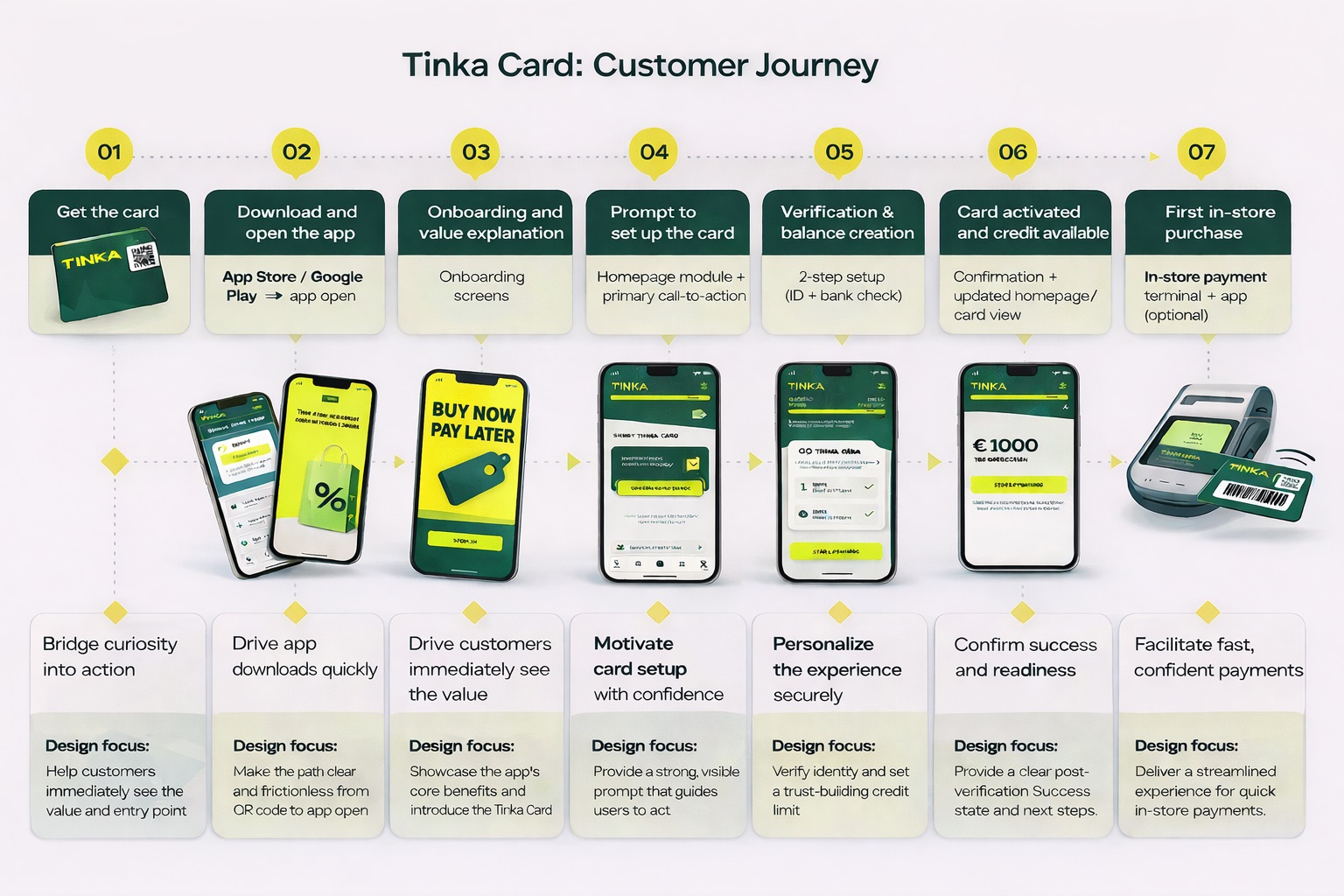
The challenge wasn't designing a card screen: it was making Pay In-Store feel credible as an end-to-end experience customers could discover, activate, trust, and use with confidence in a real retail moment, often for the first time.
Approach
The work was sequenced in two chapters that depended on each other. The rebrand and app redesign came first, getting the product foundation right so Pay In-Store launched into something coherent. The launch work then extended outward from the app into every touchpoint a customer might encounter.
Turning the refreshed brand into a stronger in-product experienceTranslated a new visual identity into a product UI that felt more considered, trustworthy, and easy to navigate, a foundation the app had lacked.
Guiding activation with clarity and trustVerification flows, readiness states, and in-app education designed to remove every point of uncertainty before a real checkout, keeping momentum rather than stalling it.
Extending the work beyond the appFAQs, landing pages, email flows, and in-store materials aligned with the app journey, answering questions before customers ever opened the app.
Working cross-functionally throughoutClose collaboration with engineering on build sequencing, legal and compliance on verification and credit flows, marketing on launch materials, and customer care on support content.
Key design question
How do you make a customer feel confident enough to use a new payment method for the first time, in a public checkout queue, with a stranger watching? That framing shaped the activation journey: every step designed to reduce uncertainty before the moment of truth, not explain things after something went wrong.
↑ the crux of the whole project
What we built
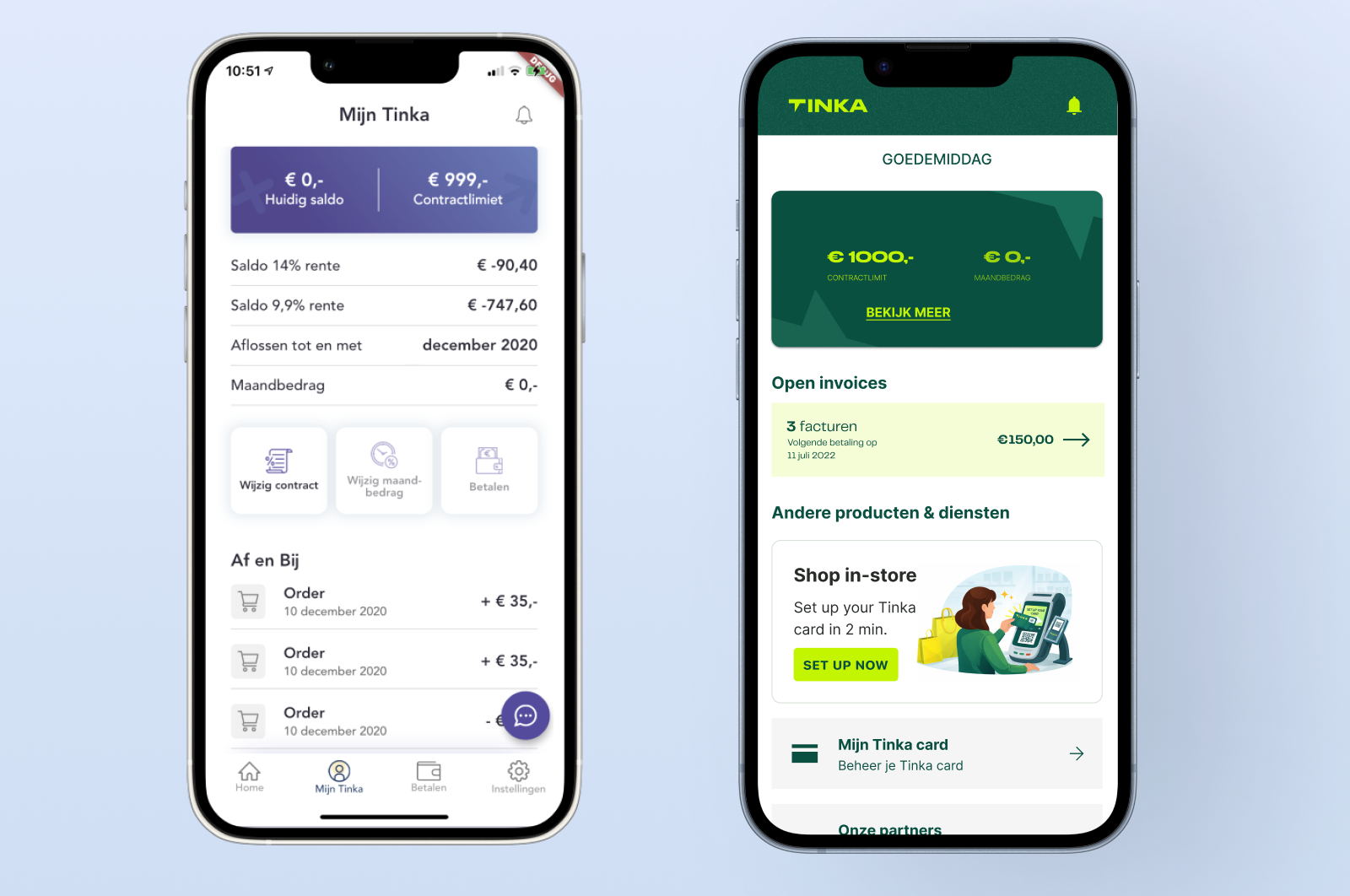
Rebranded app foundation
A redesigned mobile app that translated the new identity into a coherent, more navigable product UI.
Pay In-Store journey
The end-to-end activation and payment experience: discovery through verification, readiness, and first use.
Omni-channel support layer
Landing pages, email flows, FAQs, and in-store materials aligned to the product journey.
Build-ready design direction
Clearer direction, component patterns, and documentation for the team to move faster.
Why this project matters
The redesign and Pay In-Store launch helped shift Tinka from a repayment utility into a more active financial touchpoint, giving customers stronger reasons to return and engage beyond paying something off. 200 cards were activated in the first 5 days, app engagement increased by 10%, and downloads rose 15%.
The launch validated the core hypothesis: that a more considered product experience, paired with a genuinely new use case, could change how customers related to Tinka, not just as a debt management tool, but as a payment product they chose to use.
200
Tinka Cards activated in the first 5 days after launch.
+10%
Increase in app engagement following the redesign and Pay In-Store launch.
+15%
Increase in app downloads in the period following launch.
What this says about how I work
I design beyond the interface
Launching a payment experience required designing the surrounding ecosystem: marketing, support, and retail touchpoints, not just the app.
Trust is critical in fintech, especially for new behaviour
New payment behaviour only works when the product communicates clearly at every step. Customers won't try something new if the design leaves them uncertain.
Foundations enable growth
The redesign didn't just change how Tinka looked: it made the next phase of the product possible.
Cross-Channel Enrolment Personalisation
Connecting email, onsite experience, and enrolment flow through a cross-channel personalisation system that attributed measurable revenue across the campaign period.